Gas, Propane, and a Hundred-Year-Old Circuit
Electric ovens fail at the bake element, the sensor, the relay board and the door — roughly in that order of likelihood and reverse order of cost. Gas ranges give trouble at the igniter first, then the spark module, then the valve, and a burner that is slow to light or burns yellow is read at the flame before anything is ordered. Induction cooktops are read zone by zone with a pan on and the meter clamped, because half the “dead cooktop” calls turn out to be one zone and one board. Pro-style ranges — Wolf, Thermador, Viking, BlueStar — are ordinary work with dearer parts and the card is written against that fact.
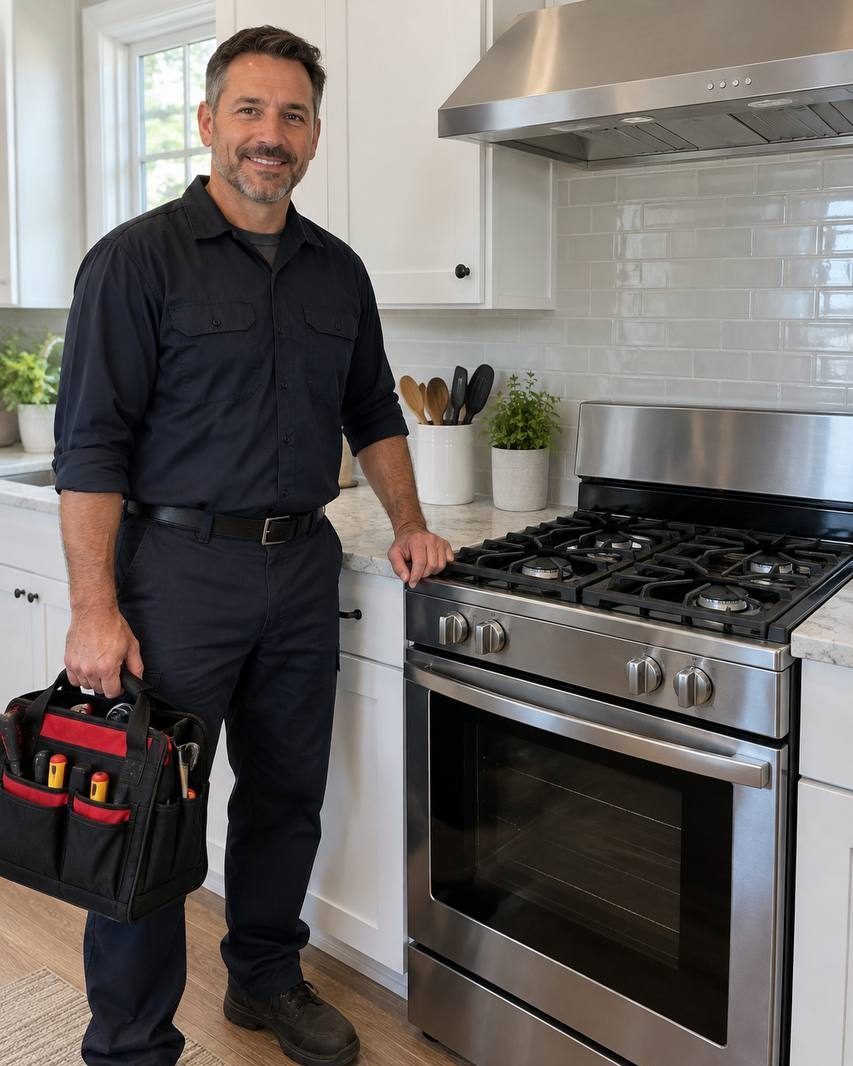
Natural gas runs down the Folly Road corridor and through most of the Country Club and Stiles Point streets; the beach, Sol Legare and the outer Johns Island roads are on propane. A range that came out of the box set up for natural gas will burn orange on propane, blacken the pans and take its time lighting, and the fix is a conversion done properly — orifices, regulator, and every burner’s flame checked — not a new igniter. The card says which it is before a part rides along.
Downtown, the peninsula kitchens west of King Street run modern ranges on wiring that was extended three times and upgraded once, and a range that reboots, trips or bakes unevenly on that supply is metered under load before any board is suspected. When the house is the fault, the card says so and the readings go to your electrician. Induction is arriving in the renovated Riverland Terrace and Avondale kitchens, and those get a zone-by-zone read before anyone says the word “board”.
A door locked since the self-clean is a latch motor or a thermal switch, not a mystery, and the technician frees it on the visit. A hinge that has let the door sag is a heat leak that makes the sensor look guilty; hinges and gaskets are on the run-through for exactly that reason. Older wall ovens in the Fort Johnson and Harbor View ranches are mostly worth keeping — simple, heavy, parts still available — and the card says so when it is true.
- Bakes twenty degrees under the display
- Bake element dark, broil element fine
- Gas burner ticking and never catching
- Induction zone dead, the rest working
- Door locked since the self-clean
- Oven light on, nothing else responding