Vents on This Side of the Harbor
The technician pulls the lint housing, looks at what has packed behind it, and puts a pressure gauge on the exhaust to get a number for what the duct is costing. Then the vent is walked to wherever it lets out — a roof cap on a two-story in Stiles Point, a hood under a raised beach house, a wall louver in a West Ashley carport — and the flap and the run are checked from both ends. Only when the air is proven does the heating side get metered: element or burner, the cycling thermostat, the high-limit, the thermal fuse. What failed goes on the card with the reading that convicted it.
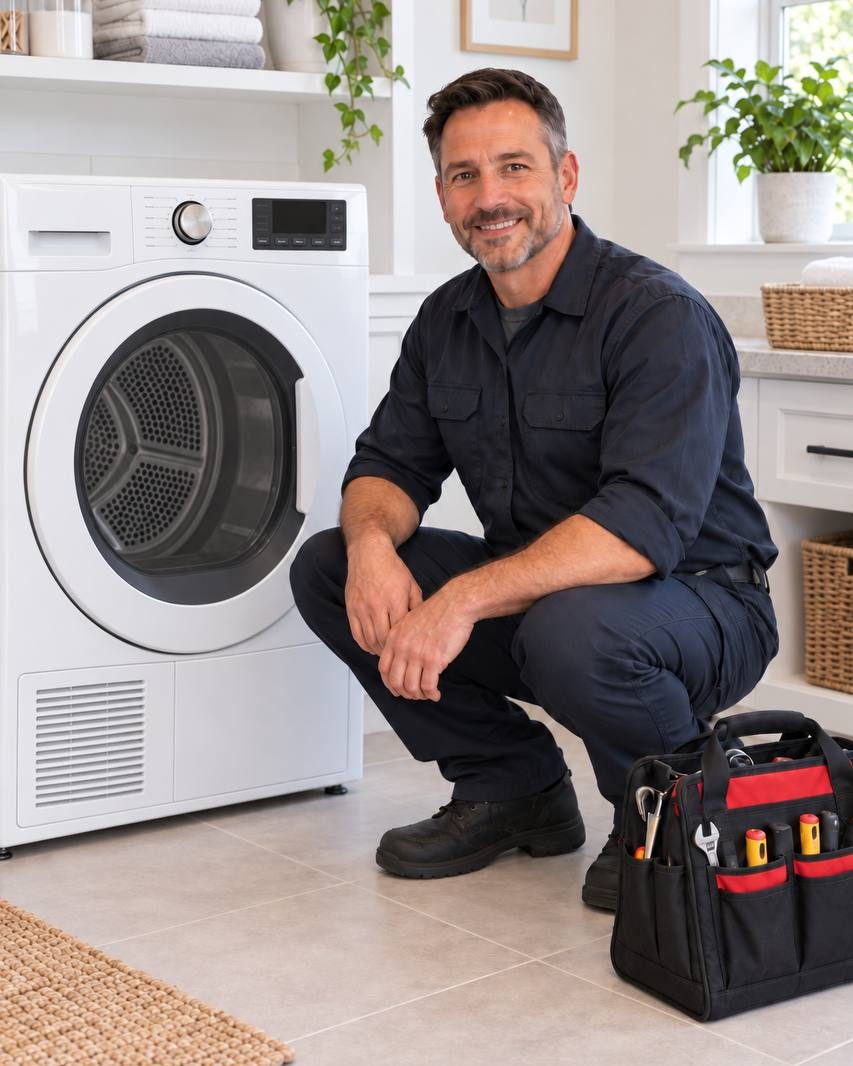
James Island dryers vent every way a builder ever tried. The sixties and seventies ranches off Camp Road and Fort Johnson push through a short wall run into a hood that has had fifty years to rust shut. The two-story houses in Stiles Point and the Country Club streets run up through the attic to a roof cap, and forty feet of pipe with a sag in the middle collects lint where nobody sees it. The raised houses on Folly and Sol Legare send the duct down through the enclosure to a hood a foot above the sand. Each of those gets a different reading, and the card names the duct, not the dryer, when the duct is what failed.
What the crew can reach — the run from the dryer side and from the hood side, the elbow behind the machine, the flap — gets cleared, re-fastened and measured again on the same visit. What it cannot reach, a buried attic section or a chase shared down a townhome row, gets written up honestly for a duct company, with the pressure numbers a duct company will want. A dryer that failed because of its duct does not get a new element it did not need.
The heat side is plain work once the air is right. Drum hardware — rollers, idler, glides, belt — goes in as a set, because replacing the one that squeals guarantees a second visit for the next one. Gas dryers along the Folly Road corridor and in the newer Johns Island streets get igniter, coils and flame sensor checked in sequence; heat-pump and condensing dryers in the downtown condos get a run-through built around their filters, coil and condensate pump instead.
- Full cycle, towels still damp at the end
- Hot for ten minutes, then cool, then hot again
- A thump or a shriek that follows the drum around
- Thermal fuse blown again inside a year
- Scorched smell on the high-heat setting
- Gas model clicks, glows, and goes dark