Panel-Front Units, Island Water, and Renovated Kitchens
Water left in the bottom is the drain path: filter, pump impeller, the check valve, the air gap or the high loop in the drain hose under the sink. A flood-sensor lockout is a leak into the pan, and the technician dries the pan and watches a cycle rather than resetting the alarm and leaving. No fill is the stop valve, the float or the inlet valve. Cloudy glass is water chemistry, not a machine fault — the dose against the water — and the card says so instead of a part that would not change the glasses at all.
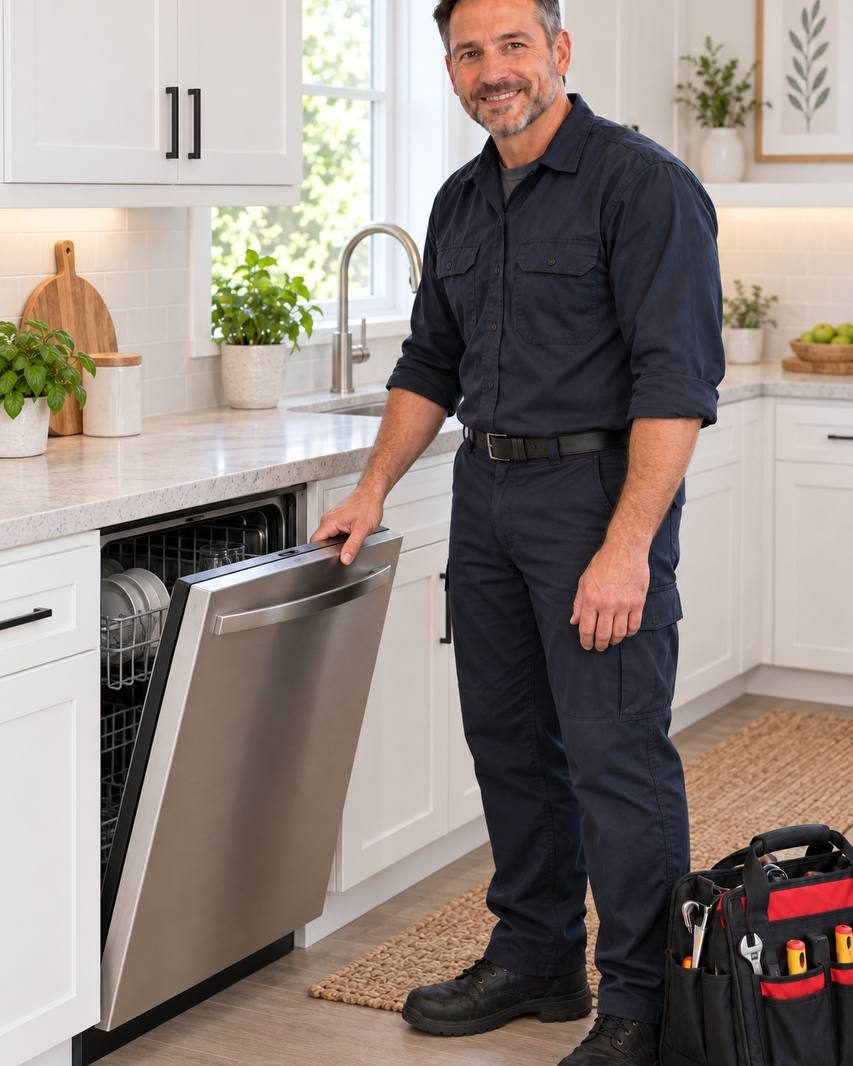
The renovated kitchens west of the Wappoo and in Riverland Terrace run panel-front dishwashers — Bosch, Miele, Fisher & Paykel drawers — sunk flush into cabinetry that was fitted to the millimetre. Getting one out without scarring the millwork is careful work and it is planned on the call, not discovered at the door; the crew carries the brackets and the shims to put it back level and anchored, because a dishwasher that rocks on its feet cracks a door seal inside a year.
Water writes the card on this map as much as the machine does. Charleston Water is soft and forgiving; a dishwasher on it that leaves film has been over-dosed. Johns Island and Wadmalaw wells are the opposite — iron, minerals, a filter and a rinse-aid change fixing what a new pump could not. The technician asks which the house is on before the racks come out, and the street book keeps the answer for next time.
The rental and turnover trade on Folly and downtown puts three households’ worth of cycles through the same dishwasher, and a machine that quits in August is far likelier to have a filter clogged with what guests scraped in than a failed pump. Those get the run-through, a clean-out, and a card the manager can forward to the owner unedited. A pump-and-motor assembly on a ten-year-old builder-grade unit gets an honest keep-or-retire line rather than a quote nobody should accept.
- An inch of water left after every cycle
- Flood sensor tripping the panel after a reset
- Hums, never fills
- Cloudy or gritty glasses
- Kick panel damp at one corner
- Door latch that no longer starts the cycle